With rough 130 million subscribers worldwide and a
presence
in a third of American homes, Home Box Office (HBO) has come a long way
from the 365 Pennsylvania-area households it originally signed up
during its debut in 1972. The channel’s reputation for innovative programming (
Game of Thrones,
The Sopranos,
Oz, etc.) has helped raise expectations for quality content. As the
Game of Thrones era ends and the channel prepares for a 2020 slate including
His Dark Materials and more
Barry, get dialed in for some facts about one of the small screen’s biggest players.
1. HBO was originally named the Green Channel.
Charles Dolan, a cable television advocate at a time when cable television was poorly understood,
thought there could be a market
for a premium station offering movies and sporting events. After
getting an investment from Time, Inc., Dolan and his staff renamed their
project Home Box Office to better highlight their Hollywood and event
programming.
2. The first HBO film broadcast is largely forgotten.
Before HBO beamed their first live sporting event in 1972—a New York Rangers/Vancouver Canucks hockey game—the channel
screened their first film:
Sometimes a Great Notion, a little-seen 1971 drama about lumber unions starring Paul Newman and Henry Fonda. (Newman
directed the film after firing Richard Colla just weeks into shooting.)
3. HBO used microwaves to get their signal out.
With satellite technology largely unreliable in the early 1970s, HBO initially distributed its signal
via microwaves.
But satellite offered a far greater reach at less of an expense, and as
the channel hit a ceiling of subscribers, they began using the
technology out of necessity. By 1977, the service
had over 600,000 households signed up.
4. HBO was initially on the air for just nine hours at a time.
For the first near-decade of its existence, HBO provided programming for
roughly nine hours out of the day. It wasn’t until competitor Showtime offered a 24-hour schedule in 1981 that the channel
decided to match it.
5. HBO's first spinoff channel bombed.
Trying to complement their schedule, HBO launched a more family-oriented channel
dubbed Take 2
in 1979. Audiences were less than impressed, and it disappeared within
the year. In 1980, HBO decided to offer a stronger brand sibling and
debuted Cinemax, which blended both new and classic movies and
promised cinephiles uninterrupted features. (HBO’s original schedule also included comedy and sports.)
6. The first HBO original movie was actually the second to air.
Eager to separate themselves from other premium channels, HBO delved into original movies early—with mixed results. 1983’s
Right of Way, starring Jimmy Stewart and Bette Davis as a married couple
planning a dual suicide, was the first film produced but the second to air. Executives felt they were on stronger footing with
The Terry Fox Story, a biopic about a runner
who lost a leg to cancer.
7. HBO cheated a little to get Star Wars.
When Fox sold off the premium television rights to
Star Wars
in 1983, they were non-exclusive: all the channels were expected to
premiere it no earlier than 6 a.m. on February 1. But some lucky viewers
noticed that HBO had managed to air the movie at midnight that same
day. They
had paid Fox
for permission to broadcast six hours ahead of the competition. Without
advertising their coup to attract an audience other than night owls, it
was essentially for bragging rights.
8. HBO's first event programming was polka.
Not counting sports, HBO’s
first live event
was coverage of the 1973 Pennsylvania Polka Festival, a
self-explanatory three-hour endurance test of one’s admiration for the
genre. Coincidence or not, subscribership fell from 14,000 that year
down to 8,000.
9. HBO scared movie studios.
With
12 million subscribers
by 1983, the pay service was increasingly becoming a destination for
filmgoers. Frightened that HBO could be wielding too much power, three
major studios—Paramount, Warner, and MCA—teamed with Viacom to launch
two competing pay-television services, Showtime and The Movie Channel.
Their strategy was to force HBO to pay more for the rights to their
films, or make them exclusive to their own channels. As it turns out,
neither rival really lost. In 1987, HBO
got a library of Paramount titles for their viewers and paid the studio a half-billion dollars for the privilege.
10. HBO may have paid $40 million for Ghostbusters.
Having major hit films was a priority in the 1980s, a time when VHS
was slowly gaining market share for home movie viewing. At the time, pay
services obtained movie rights based on their first-run performance—the
bigger the hit, the more it would cost them. When 1984’s
Ghostbusters
became a smash, HBO had an existing and exclusive deal with Columbia
Pictures. Without a cap in place, former HBO employee Bill Mesce allege
they paid the studio
a staggering $40 million for broadcast rights.
11. HBO made Emmy history with The Sopranos.
Prior to 1999’s debut of HBO’s most notable series, no cable drama
had ever been nominated
for a Best Drama Series Emmy. That changed with the mob show’s first
season: it racked up 16 nominations in all. Throughout the show's entire
run through 2007, it was
nominated 112 times and won 21 times.
12. HBO got hacked.
When HBO began scrambling its satellite signal in 1986, disgruntled
dish owners—who felt buying the expensive, over-sized equipment entitled
them to free programming—were irate. A dish dealer named John
MacDougall was agitated enough
to interrupt HBO’s presentation of
The Falcon and the Snowman and put up a message: “$12.95/month? No way!” The FBI investigated and MacDougall received probation and a $5,000 fine.
13. Oz was not HBO's first prison drama.
While 1997’s
Oz is regarded as both the channel’s first
scripted hour-long narrative drama and their first series about a
prison, it’s more a matter of semantics.
Maximum Security,
filmed in a downtown Los Angeles jail, first aired in 1984. Though the
six-episode run had some people assuming it was a miniseries, producer
Ron Howard told
The New York Times in 1985 that he was
frustrated HBO was non-committal about the possibility of extending it.
14. HBO dumped the original Game of Thrones pilot.
After viewing footage of a 2009 pilot adapted from George R.R. Martin’s fantasy saga, executives
were unhappy with the result.
Before nearly scrapping the series altogether, they decided to re-shoot
the episode, including a partial re-cast. (Emilia Clarke, who portrays
Daenerys, was among those who came in for the revised pilot.)
15. HBO turned down Mad Men.
Kind of. While considering Matthew Weiner’s pilot, the network
wanted Sopranos
creator David Chase to produce the series (Weiner had been a writer on
that show). When Chase indicated he wanted to move away from television,
HBO passed on the show altogether.
16. The average HBO subscriber hangs in there for about 18 months.
Signing up for HBO and then canceling after you've inhaled
Game of Thrones
or any of their other shows is a common occurrence, but not everyone
drops out after a week or two of binge-watching. According to NBC and
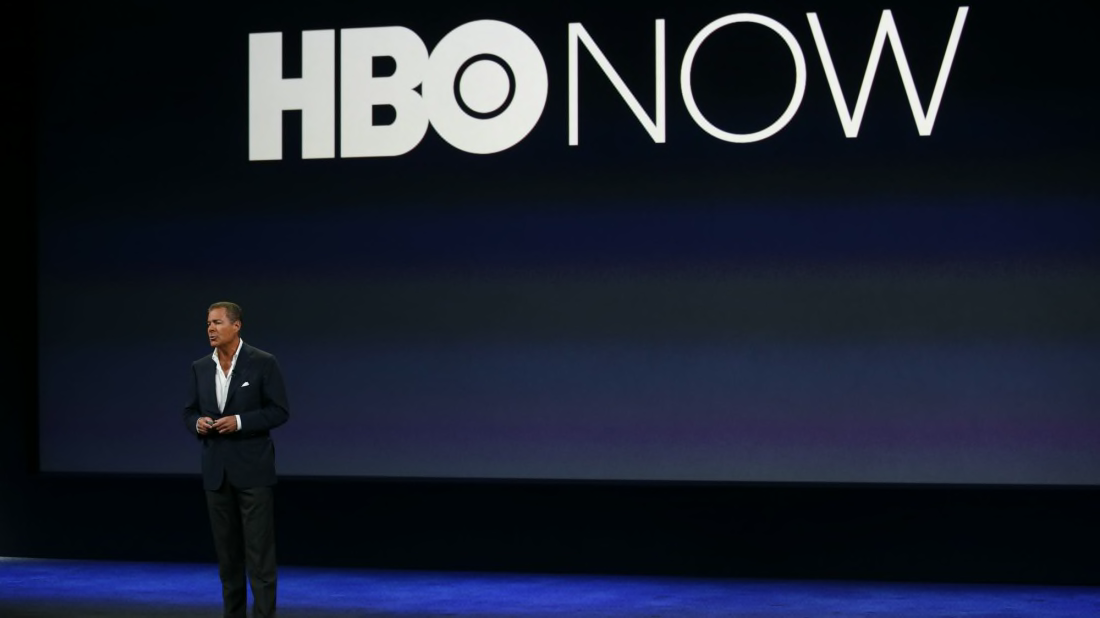
research firm Parks Associates, subscribers to their HBO Now streaming
service usually
keep the subscription for about 18 months.
https://www.mentalfloss.com/article/625406/best-selling-portable-air-conditioners?utm_content=infinitescroll1


Коментарі
Дописати коментар